Claim Free Quotes and Water Testing
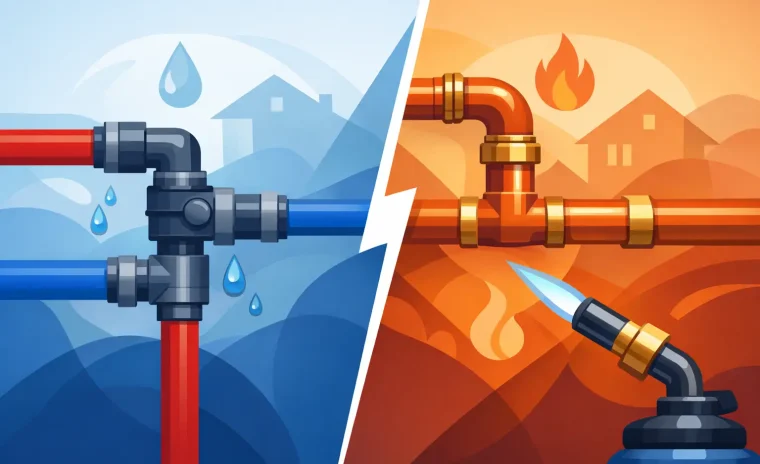
If you are planning a repipe, remodeling a bathroom, or replacing damaged water lines, the pex vs copper plumbing question matters more than most homeowners expect. The right choice affects installation cost, repair options, long-term reliability, and how confident you feel about the plumbing behind your walls.
For many homes, there is no single “best” material in every situation. What works well in a new addition may not be the right fit for an older home with specific water conditions, exposed piping, or a tighter repair budget. The smart decision usually comes down to how the home is built, what the plumbing system has been through, and what matters most to you – price, longevity, flexibility, or performance.
Pex vs Copper Plumbing at a Glance
PEX is a flexible plastic water line. Copper is a rigid metal pipe that has been used in homes for decades. Both can deliver clean, reliable water when installed correctly, but they behave very differently during installation and over time.
PEX is typically faster to install and often less expensive. It bends around obstacles, needs fewer fittings, and can be easier to run through walls and ceilings. That can reduce labor time, which matters if you are repiping a larger part of the house.
Copper has a long track record and a reputation many homeowners still trust. It handles heat well, stands up to UV exposure better than PEX, and is often seen as a more traditional, proven material. In some homes, especially where piping is exposed or where homeowners prefer a metal system, copper still makes a lot of sense.
Cost Is Often the First Deciding Factor
For many homeowners, cost pushes this decision to the front of the line. In most cases, PEX is less expensive than copper, both in material and labor.
Copper prices are tied to the metal market, so material costs can run high. Installation can also take longer because copper is rigid, requires more fittings, and usually involves soldered connections. That extra labor adds up.
PEX is generally more budget-friendly. Because it is flexible and quicker to install, it can lower the overall project cost. If you are repiping a home or replacing a large section of plumbing, the savings can be significant.
That said, lower upfront cost does not automatically make PEX the better value. If part of your plumbing is exposed to sunlight, near high heat, or in an area where local code or project conditions favor copper, a cheaper material may not be the right fit.
Installation Differences Matter in Real Homes
This is where the PEX vs copper plumbing decision becomes practical instead of theoretical. A plumber is not working in a perfect showroom. They are working in your walls, crawlspace, attic, utility room, or slab setup.
PEX has a clear advantage in difficult layouts. It can snake through framing with fewer cuts and connections, which is especially helpful in remodels and partial repipes. Fewer fittings can also mean fewer potential leak points in certain installations.
Copper is less forgiving. It needs more precise cutting and joining, and installation is typically more involved. In some cases, that is not a problem. In others, especially when access is tight, copper can turn a straightforward job into a more disruptive one.
If speed matters because you want water restored quickly or want to limit wall openings, PEX often gives the installer more flexibility.
Durability Is Not One-Size-Fits-All
Homeowners often ask which material lasts longer. The honest answer is that both can last a long time, but the conditions inside and around your home matter.
Copper has a strong reputation for longevity, but it is not immune to problems. Water chemistry can affect it. In some homes, acidic water or other water quality issues can contribute to pinhole leaks over time. Older copper systems may also develop corrosion or wear at joints.
PEX resists corrosion and does not develop pinhole leaks in the same way copper can. It also performs well in many freeze-prone situations because it has some ability to expand. That does not make it freeze-proof, but it can be more forgiving than rigid pipe when temperatures drop.
On the other hand, PEX should not be exposed to direct sunlight for extended periods, and it is more vulnerable to physical damage in some exposed applications. If the piping will be visible and potentially bumped, scraped, or left in UV-exposed areas, copper may be the safer choice.
Water Quality and Performance
Most homeowners want to know whether one material affects the taste or safety of their water. In properly installed residential systems, both materials are commonly used for potable water lines. Still, local water conditions can influence which option performs better.
Copper has long been trusted for drinking water systems. However, in homes with aggressive water conditions, it can be more prone to deterioration. If a house already has a history of copper pinhole leaks, replacing damaged sections with more copper may not solve the underlying issue.
PEX is resistant to scale and corrosion, which can be an advantage in certain water conditions. It is widely approved for residential water supply lines, but some homeowners simply feel more comfortable with copper because it has been around longer.
This is one of those situations where the home’s history matters more than general opinions. If your plumbing has had repeat failures, the right answer should be based on what is actually happening in your water system, not just what worked in someone else’s house.
How Each Material Handles Repairs
Repair work is another point homeowners do not always think about until there is an active leak.
PEX repairs can be straightforward, especially when the damaged line is accessible. Because the material is flexible, replacing a section can sometimes be less invasive. That can help in attics, crawlspaces, and remodel zones.
Copper repairs can also be very reliable, but they may take more labor depending on location and pipe condition. If the surrounding copper is older or showing wear, one repair can lead to a larger conversation about the rest of the system.
If you are dealing with recurring leaks, the bigger issue may not be whether one section can be patched. It may be whether the home is reaching the point where a broader replacement strategy makes more sense.
When Copper May Be the Better Choice
Copper is often a strong choice when piping will be exposed, when homeowners want a traditional material with a long history, or when the installation area involves conditions that are less ideal for PEX. It also makes sense in homes where appearance matters, such as visible utility areas where owners prefer the look of finished metal piping.
Some homeowners also prefer copper for hot water applications because of its long-standing performance under heat. While PEX is approved for hot water lines, copper still carries a comfort factor for many people.
If your home already has a copper system in good shape and only a limited section needs replacement, staying with copper may also be the cleaner solution.
When Pex May Be the Better Choice
PEX is often the practical choice for repipes, remodels, and cost-conscious projects. It is especially useful in homes where access is difficult and the goal is to reduce labor time and disruption.
It can also be a smart option in areas where freezing temperatures are a concern, since it has more flexibility than rigid pipe. Again, that does not mean it is safe to leave plumbing unprotected in cold conditions, but it can offer an extra margin in the right setup.
For homeowners looking for a reliable, modern material that can lower project cost without sacrificing performance, PEX is often worth serious consideration.
The Best Choice Depends on Your House, Not Just the Material
A lot of online advice about PEX vs copper plumbing makes the decision sound universal. It is not. A newer home addition, an older house with aging lines, a slab leak repair, and a full repipe all create different priorities.
That is why a professional evaluation matters. A licensed plumber can look at pipe access, water conditions, existing material, visible wear, and your budget before recommending a direction. In many cases, the best answer is based less on what is “better” in general and more on what will give your home the most reliable result with the least future trouble.
If you are weighing a repair versus a larger upgrade, getting a clear assessment now can help you avoid paying twice – once for the immediate fix and again for the bigger problem that was already starting to show.
When plumbing decisions affect your walls, water, and peace of mind, the goal is not to pick the trendiest material. It is to choose the one that fits your home well and holds up when you need it to.